Victor Bari’s Path to Regenerative Cotton Farming in Uganda’s Kidepo Valley
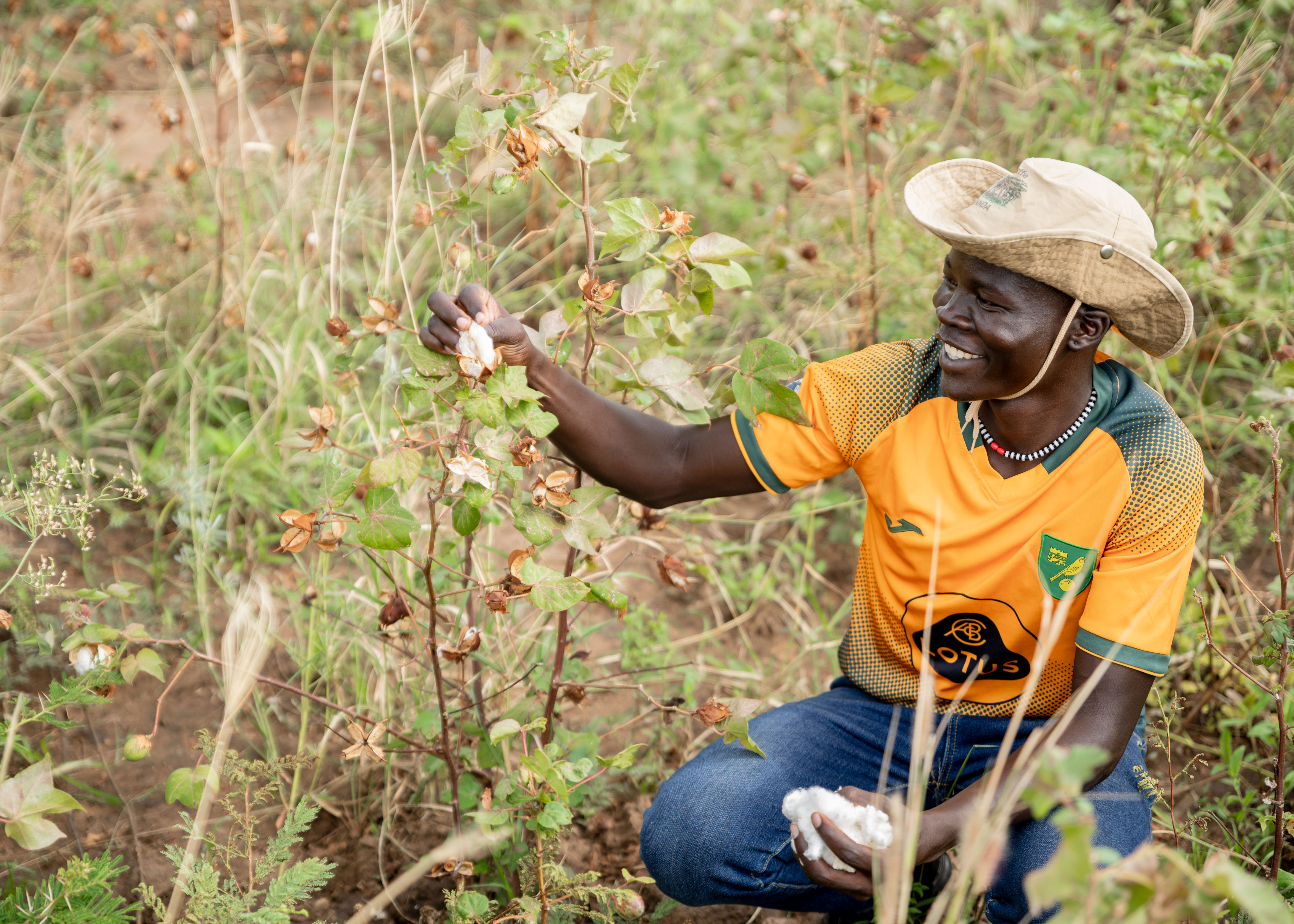
Victor Bari, a cotton farmer in the Kidepo Landscape.
For seven years, Victor Bari has grown cotton the way he was taught. Steady work, familiar routines, and a kind season would all come together to guarantee a good harvest. But in Uganda’s Kidepo landscape, cotton farming has become harder to predict and even harder to profit from.
“Frequent pest infestations damage the crop by causing stunted growth, yellowing, and reduced yields,” Victor says. “Moreover, recurrent heavy rains further harm the crop, which thrives best under moderate rainfall.”
Low yields and poor-quality harvests have tested his resolve. Still, Victor now speaks with a different kind of confidence. This confidence is grounded in new practices that restore soil health, reduce losses, and make farming more resilient in a landscape shared with wildlife.
The stakes stretch beyond one farmer’s field.
The expansive savanna of Uganda’s Kidepo Valley Conservation Area, known for its large herds of elephants and buffaloes, also supports many smallholder farmers whose livelihoods depend on healthy, productive land.
Years of land degradation, paired with increasingly unpredictable weather, have steadily undermined agriculture and weakened ecological balance.
Victor’s experience mirrors the broader reality for smallholder cotton farmers in the Karenga and Kitgum districts. Many contend with limited access to agronomic best practices, low uptake of organic and climate-smart techniques, and gaps in post-harvest handling. These challenges compound season after season.
A Regenerative Agriculture Initiative That Puts Skills in Farmers’ Hands
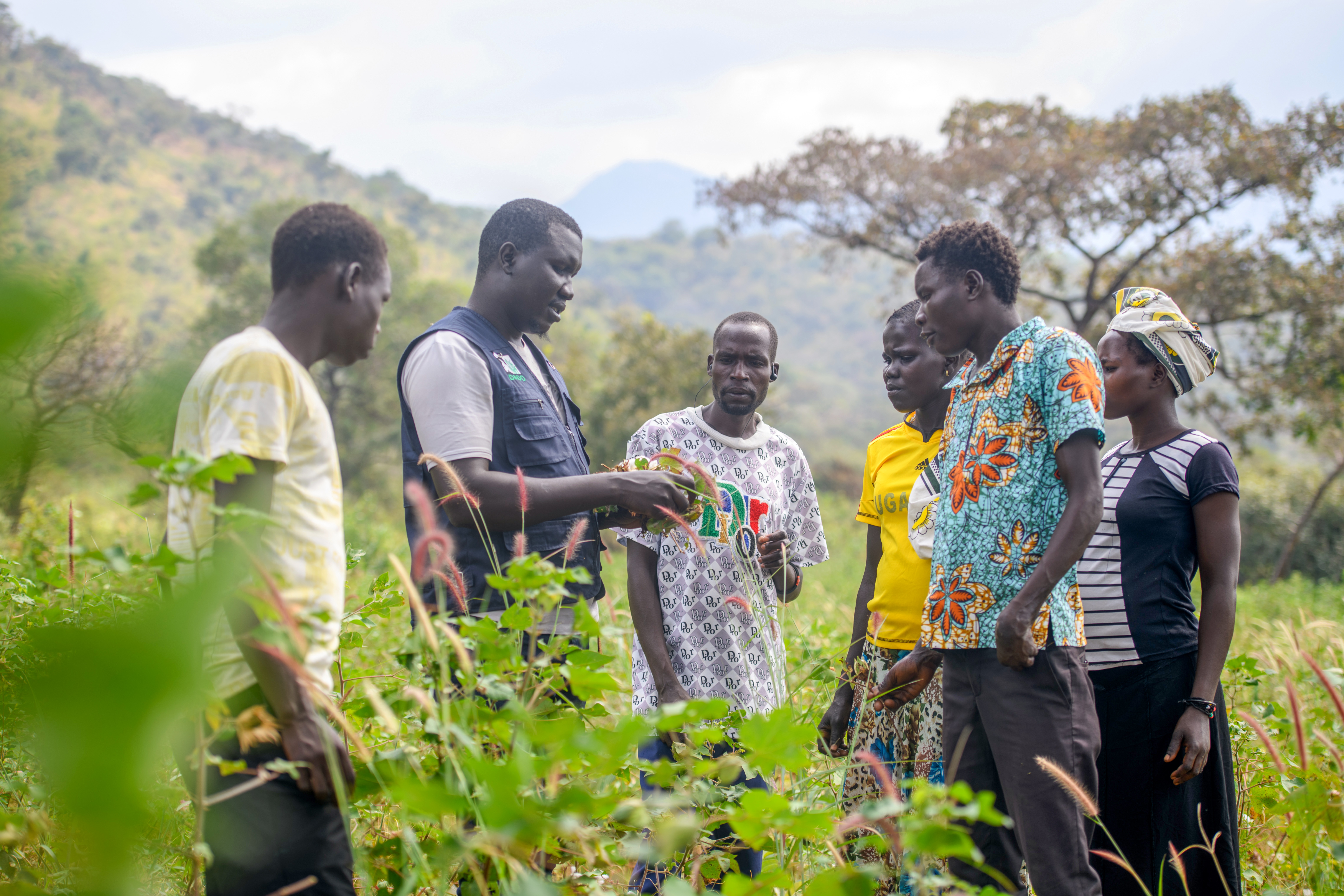
Cotton farmers in Kidepo in a learning session with an officer from the Dynamic Agro-Pastoralist Development Organization.
In June 2024, a three-year regenerative cotton farming initiative offered a different path. Funded by Conservation International through its Regenerative Fund for Nature and implemented by the African Wildlife Foundation in collaboration with the Dynamic Agro-Pastoralist Development Organization, the initiative supports 2,280 cotton farmers, half of whom are women, to adopt regenerative agriculture practices that restore soil health, increase productivity, and improve crop performance.
Through the project, Victor has embraced farmer-managed natural resource regeneration and agroforestry to bring life back to degraded soils. He has also learned to produce organic pesticides from local materials and has begun using soil-friendly techniques such as mulching and intercropping.
“These practices are already making a difference by reducing pest infestations, minimizing crop losses, and will steadily improve both the quality and quantity of my harvests," Victor says.
Within one year of implementation, adoption of regenerative practices such as agroforestry, biological pest control, organic manure, minimum soil tillage, intercropping, and crop rotation rose from 24 percent in 2024 to 54 percent among participating cotton farmers.
The shift signals growing momentum toward more resilient and sustainable cotton production.
Farming Beside Wildlife Corridors, Reducing Conflict

Elephants in the remote transboundary Kidepo Landscape of Northern Uganda.
Cotton fields in this landscape sit close to protected areas, where farming realities intersect with wildlife movement.
“According to Uganda Wildlife Authority, 70 to 80 percent of the wildlife in the region live outside the Kidepo Valley National Park,” Henry Mukiibi, AWF’s Senior Program Manager, says. “To address this, the project equips farmers with skills to mitigate human–wildlife conflict, as elephants and buffaloes frequently wander into their fields. These strategies help reduce crop damage while protecting the wildlife that share the landscape.”
Looking ahead, the project aims to deepen the transition to regenerative cotton production, restore degraded land in wildlife corridors near cotton farms, and strengthen market links for farmers.
Victor and other participating farmers have already been connected to a cotton buyer—an early step toward more stable demand and improved returns for sustainably produced crops.
The stewardship of farmers like Victor is essential to sustaining healthy ecosystems and ensuring conservation delivers lasting benefits. As the region’s primary cash crop, cotton helps families meet essential needs.
With continued support, Victor and other farmers in the Kidepo landscape are working to increase crop productivity and to show the next generation that cotton farming can be more than survival. It can be a pathway to responsible land stewardship.